
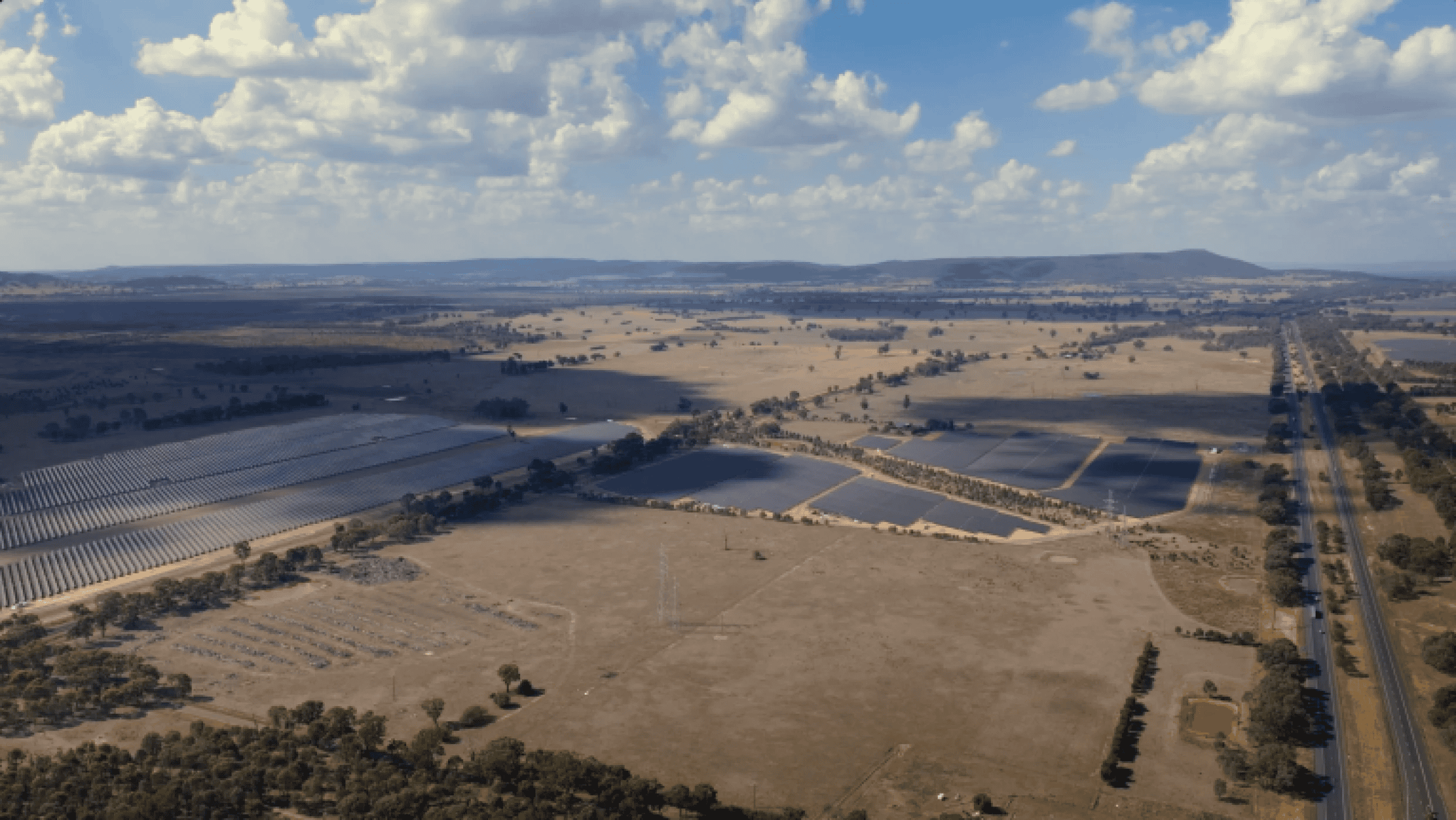
Amazon, the global technology and cloud services giant, has made a significant commitment to renewable energy development in Australia by signing nine new power purchase agreements representing 430 megawatts of combined generation capacity. Notably, eight of these nine projects include integrated battery energy storage systems that are co-located with the power generation facilities, demonstrating Amazon’s recognition of battery storage’s critical importance in supporting data centre operations. This announcement represents Amazon’s largest single-year investment in renewable energy in Australia and marks a historic milestone as these are the company’s first solar-plus-storage power purchase agreements signed in Australia and, importantly, the first such combined renewable and storage agreements Amazon has entered outside the United States.
The portfolio of nine projects demonstrates remarkable diversity in both technology and geography. The composition includes one wind farm, three utility-scale solar-plus-storage installation sites, four distributed solar-plus-storage projects, and a new battery energy storage facility that will be added to the existing Mokoan solar photovoltaic power plant. This diversified portfolio approach reflects sophisticated energy procurement strategy designed to maximize generation diversity while ensuring reliable, consistent power supply across different geographic regions and generation profiles.
The projects themselves span across two major Australian states: New South Wales and Victoria. Specific projects named in the agreement include utility-scale sites such as the Muswellbrook Solar Farm (94.5 megawatts with 70 megawatts of battery storage), the Forest Glen Solar Farm (72 megawatts with matched battery capacity), and the Stanbridge Solar Farm (3.8 megawatts with integrated storage). In Victoria, the portfolio includes the Golden Plains 2 Wind Farm developed by TagEnergy with a capacity of 201.8 megawatts, along with four distributed solar facilities at Laceby, Indigo, Barnawartha, and Mooroopna—each incorporating battery storage—plus the addition of 32 megawatts of battery storage capacity to the existing Mokoan Solar Park. These projects involve leading renewable energy developers including OX2, X-ELIO, Anza, TagEnergy, and European Energy, demonstrating Amazon’s partnerships with established, experienced renewable energy developers in the Australian market.
According to BloombergNEF data, Amazon was the largest corporate purchaser of carbon-free energy in Australia during 2025 and continues to rank among the leading corporate renewable energy purchasers globally. This latest commitment reinforces and extends that leadership position while demonstrating the company’s long-term strategic commitment to powering its operations with renewable energy across multiple international markets.
This renewable energy deal directly supports Amazon’s AU$20 billion (US$14.34 billion) commitment to expand data centre infrastructure across Australia by 2029, a commitment made alongside Australian Prime Minister Anthony Albanese in June 2025. The data centre expansion is specifically designed to strengthen Australia’s cloud computing and artificial intelligence capabilities, positioning the country as a regional hub for advanced computing services. The renewable energy agreements provide the carbon-free electrical power necessary to meet both the substantial operational demands of modern data centres and Amazon’s corporate commitment to reaching net-zero carbon across its global operations by 2040 under The Climate Pledge, Amazon’s ambitious climate action initiative.
Since 2020, Amazon has invested an estimated AU$2.8 billion in renewable energy projects throughout Australia. With today’s announcement of nine additional projects, Amazon now has a total of 20 renewable energy projects contracted in the Australian market, representing a substantial ongoing investment in Australia’s clean energy transition and demonstrating serious long-term commitment to renewable energy development in the region.
Beyond simple energy procurement, the nine projects incorporate elements of environmental responsibility and land use optimization. The hybrid project structure demonstrates commitment to land rehabilitation and agricultural co-use, addressing community concerns about land use while delivering environmental benefits. The Golden Plains 2 wind farm developed by TagEnergy in Victoria represents a major component of the portfolio, while the solar-plus-storage sites at Forest Glen in New South Wales and distributed solar projects throughout Victoria showcase different approaches to renewable energy deployment suited to local geography and grid requirements.
The Mokoan Solar Park, where Amazon is adding 32 megawatts of battery storage capacity to the 58-megawatt facility, was developed by European Energy and became operational earlier in 2026. This was part of Amazon’s June 2025 announcement covering three utility-scale solar projects totalling 333 megawatts of generation capacity. That earlier agreement with European Energy also encompassed the 150-megawatt Winton North Solar Park in Victoria and the 125-megawatt Bullyard Solar Park in Queensland, both of which are currently in pre-construction procurement phases. Jens-Peter Zink, deputy chief executive officer of European Energy, indicated at the time that the company’s Australian operations were “just ramping up,” suggesting further expansion and project development ahead in the market.
Amazon’s approach to integrating battery storage into its renewable energy contracts mirrors strategies employed by other hyperscale technology operators in Australia. Microsoft, for example, has entered a 15-year power purchase agreement with FRV Australia for a 300-megawatt solar plant in New South Wales specifically to power the company’s data centre operations in that state. This convergence of strategy among major technology firms reflects industry-wide recognition of battery storage’s critical importance in supporting large, consistent power demands from data centre operations.
The emphasis placed on battery storage integration within Amazon’s latest portfolio reflects broader industry recognition and growing understanding that energy storage systems will play an absolutely crucial role in supporting the expansion of data centre infrastructure and artificial intelligence compute capabilities. In interviews with industry experts, Fluence’s chief growth officer Jeff Monday noted in an exclusive interview with ESN Premium at the Energy Storage Summit Australia 2026 that battery storage addresses three primary use cases for hyperscale data centre operators: first, accelerating grid connection timelines by reducing firm power commitments required from grid operators; second, providing more efficient backup power systems that can effectively replace traditional diesel generators; and third, smoothing and optimizing power loads between data centres and the grid or on-site renewable generation, improving overall system efficiency and reliability.
Monday made a significant prediction that once standardised battery storage blueprints and system designs are finalized with hyperscale customers in the United States, deployment and adoption of battery storage in Australia will experience a “slingshot” moment characterized by rapid acceleration. He stated: “I know you talked about the data centre progression that’s happening here in Australia, but I actually see it’s probably a bit of a slingshot in that once the blueprints are defined, I think it’s going to massively scale here locally.”
The integration of battery systems into data centre infrastructure creates additional economic opportunities for these assets to participate in wholesale electricity markets during periods when the storage capacity is not required for facility operations. This capability helps convert the data centre boom into a grid growth story by improving investment economics while providing critical grid flexibility services that support grid stability and renewable energy integration. This creates a virtuous cycle where data centre operators gain additional revenue streams while simultaneously supporting grid modernization and clean energy transition.
However, concerns are mounting among various stakeholders regarding whether data centre developers and operators are contributing adequately to the costs of grid infrastructure expansion required to support their operations. Various members of the energy industry have warned that social backlash is inevitable if facilities are perceived as freeloading on Australia’s clean energy transition without bearing their fair share of grid infrastructure development costs. The challenge is substantial: integrating the enormous new baseload demand from data centres into a grid that is increasingly reliant on variable renewable energy sources requires sophisticated solutions and significant infrastructure investment.
These challenges have prompted calls from industry experts and policymakers for data centres to move beyond simply purchasing renewable energy through PPAs and actively participate in grid stability solutions through battery storage integration and participation in grid services markets. In response to these needs, the Australian Energy Market Commission (AEMC) has begun developing regulatory frameworks specifically designed to accommodate what it terms “inverted baseloads”—defined as large, constant electricity consumers like hyperscale data centres that maintain relatively stable power demand profiles. Draft access standards released in March 2026 propose differentiated requirements for data centre connections based on facility size thresholds at 30 megawatts and 100 megawatts, recognizing that different sized facilities present distinct grid integration challenges and opportunities.
The scale of future data centre demand is staggering. The International Energy Agency (IEA) projects that global electricity demand from data centres will more than double by 2030 to exceed 945 terawatt-hours annually, driven substantially by AI-optimised facilities where demand is expected to more than quadruple over the same period. This exponential growth in data centre demand, particularly from AI facilities, makes the integration of battery storage systems not merely advantageous but essential for grid stability and the continued expansion of data centre capacity in Australia and globally.