
The global commercial and industrial battery energy storage system (C&I BESS) market is positioned for exceptional growth throughout the 2026-2036 period, driven by converging technological, economic, and environmental factors creating unprecedented demand for battery storage solutions across diverse commercial and industrial applications. The market forecast projects that the global C&I BESS market will reach a valuation of $21 billion by 2036, representing a transformation of how commercial enterprises and industrial operations approach power management, reliability, and sustainability.
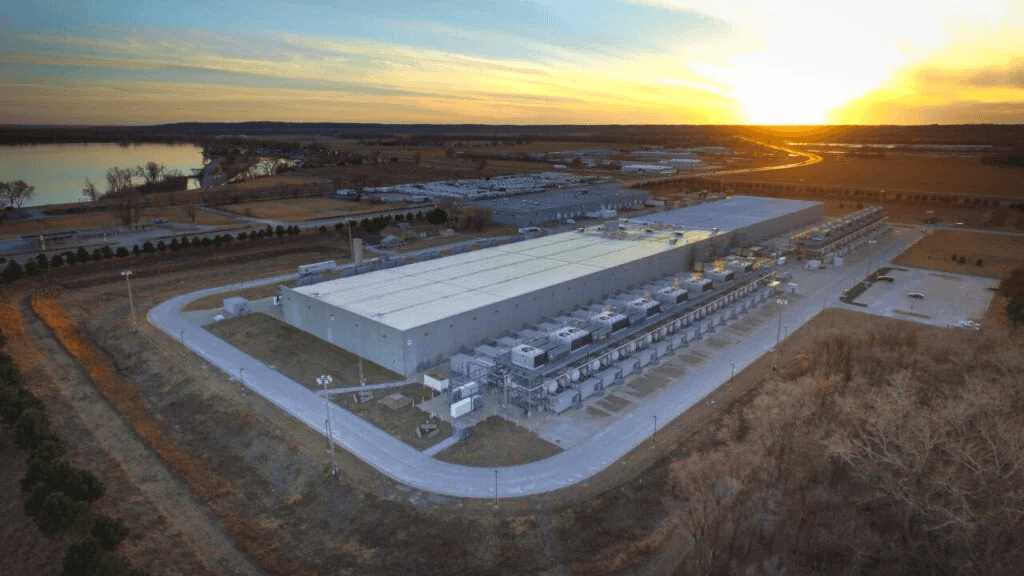
The primary growth driver for commercial and industrial battery storage is the explosive expansion of artificial intelligence-fueled data centre construction globally. Modern data centres, particularly those optimized for artificial intelligence applications and large language model processing, require substantial, consistent electrical power supplies with minimal interruption. Battery storage systems integrated with these facilities provide multiple critical functions: they smooth power delivery from the grid and renewable sources, provide backup power during grid interruptions, and enable participation in grid services markets when the facility’s power demand is lower than its renewable generation or grid connection capacity.
Telecommunications infrastructure remains a large and strategically important source of demand for commercial battery storage systems. With 5G network densification ongoing globally and 6G rollout beginning to shape infrastructure investment decisions particularly in China and other advanced markets, battery storage at telecommunications base stations and network facilities provides critical backup power capabilities. The transition from legacy lead-acid battery technology to modern lithium-ion battery chemistry continues at rapid pace, with sodium-ion chemistry emerging as a credible alternative in cost-sensitive deployments where lead-acid might have been historically used. This technology transition represents a major market opportunity for battery suppliers and integrators.
The electric vehicle charging infrastructure sector presents a fast-growing commercial opportunity for battery energy storage systems. Grid constraints continue to bottleneck the deployment of direct current (DC) fast-charging stations, as the electrical infrastructure in many locations cannot simultaneously support multiple high-power charging events. Battery-buffered charging systems, wherein battery storage systems are deployed at charging locations to provide power for fast charging without requiring massive grid upgrades, have emerged as an increasingly practical and economical solution for EV charging operators who cannot wait for utility-scale grid infrastructure improvements. This application combines growth in EV adoption with battery storage deployment in a virtuous cycle.
In construction, agriculture, mining, and other industrial sectors, the electrification of heavy machinery and equipment is creating substantial new demand for on-site battery energy storage systems. When companies deploy electric equipment for heavy construction, agricultural operations, or mining activities at remote locations with limited or no meaningful grid connection, battery energy storage systems provide the necessary power infrastructure to support fleet charging and equipment operation. This represents a significant emerging market segment as industries transition away from diesel-powered equipment and embrace electrification.
Beyond lithium-ion battery chemistry, which continues to dominate commercial applications, redox flow batteries are gaining significant traction in data centre and high-cycle industrial applications. Redox flow battery chemistry offers distinctive advantages in specific application scenarios: they exhibit minimal performance degradation even after thousands of charge cycles, employ a non-flammable liquid electrolyte reducing fire risk, and offer independently scalable power and energy capacity, meaning that energy capacity and power capacity can be sized independently for specific application requirements. These characteristics make flow batteries particularly attractive for applications where long cycle life, high reliability, and non-flammable operation are paramount concerns.
Sodium-ion battery chemistry is moving from laboratory development and pilot production toward early commercial deployment at scale. Manufacturers and integrators view sodium-ion technology as offering cost advantages compared to lithium-ion while providing acceptable performance for many applications. Second-life electric vehicle batteries, representing another alternative technology, are finding their first large-scale data centre applications as EV manufacturers and fleet operators seek secondary uses for batteries that have degraded below automotive performance requirements but retain 70-80% capacity, making them suitable for stationary storage applications. Nickel-zinc chemistry is establishing a foothold in specific market segments, particularly for uninterruptible power supply (UPS) applications in commercial facilities.
The competitive landscape shows no single alternative technology positioned to displace lithium-ion completely and wholesale in all applications, but each alternative chemistry is carving out defensible niches where the specific technical demands and economic requirements of particular applications align particularly well with the technology’s distinctive strengths and characteristics. Across all these technology choices and market segments, the commercial and industrial battery energy storage market is experiencing robust growth that reflects fundamental changes in how commercial facilities and industrial operations approach power management, resilience, and energy transition objectives.
Taken from GlobeNewswire, Written By Staff