
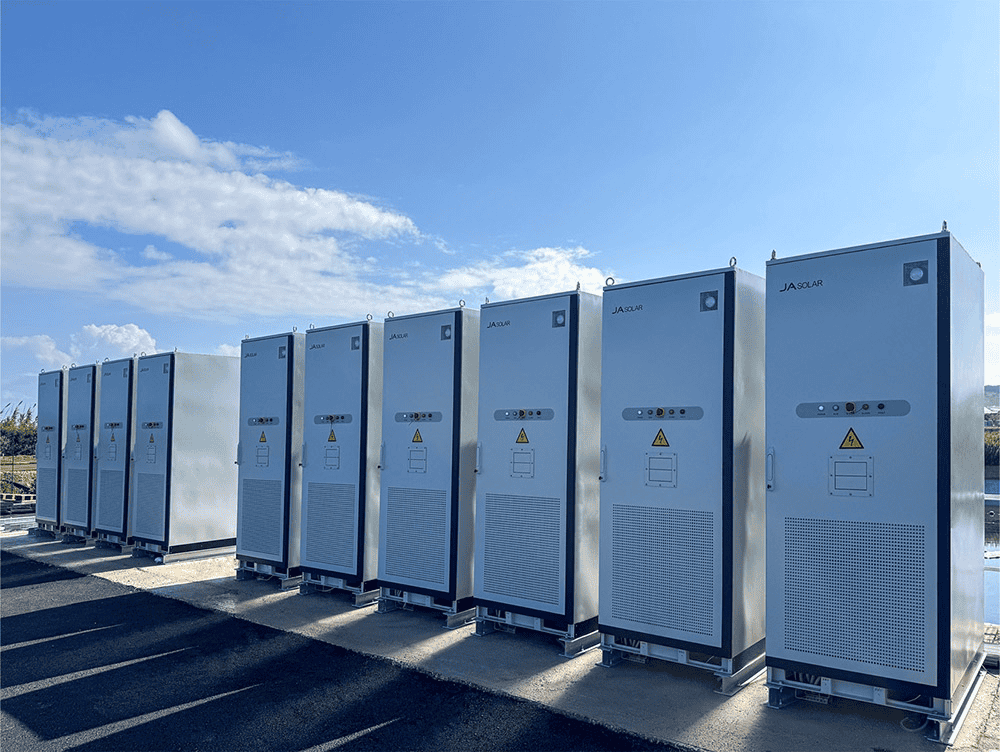
As losses continue to mount across the global photovoltaic manufacturing sector, leading solar companies are moving more aggressively into energy storage as a new growth engine. On Dec. 12, JA Solar took a significant step in that direction by formally establishing a dedicated storage subsidiary, Beijing JA Solar Energy Storage Technology Co., Ltd., with registered capital of RMB 300 million.
Corporate records from Chinese business database Tianyancha show that the new entity will concentrate on research and development in advanced energy technologies, energy storage system services, manufacturing of new energy power equipment, and related commercial activities. Ownership disclosures indicate the subsidiary is fully controlled by JA Solar Energy Co., Ltd., which itself sits under the broader JA Solar Technology group.
The move follows a series of strategic storage-related announcements in recent months as the company accelerates diversification beyond its core PV business. In early November, JA Solar officially launched its “JA Energy Storage” brand and introduced a range of storage products at an event in Santiago, Chile, reinforcing its international ambitions. During the same period, the company entered a strategic partnership with Cornex, covering joint research efforts as well as supply and sales agreements for key storage components, including DC-side systems, outdoor cabinets, and battery products targeted largely at overseas markets.
JA Solar’s expansion builds on groundwork laid since its initial entry into the energy storage sector in 2022. Since then, the company has assembled a broad product portfolio spanning residential, commercial and industrial, and utility-scale applications under its BlueStar, BluePlanet, and BlueGalaxy product lines. Beyond complete systems, JA Solar also supplies DC-side equipment, outdoor enclosures, and battery solutions for both domestic and international customers, creating an integrated storage ecosystem that covers development, manufacturing, sales, and supply chain operations.
At SNEC 2025, the company showcased its latest technological progress with the launch of JAGalaxy 4.0, a next-generation smart energy storage platform. Built around high-capacity battery cells exceeding 500 Ah, the system delivers up to 7.8 MWh within a standard 20-foot container. JA Solar said this design improves volumetric energy density by nearly 40%, enhancing space efficiency and overall project economics. The platform is rated for a cycle life of more than 12,000 cycles. Alongside this launch, the company also presented an expanded lineup of sodium-ion battery products, signaling continued investment in alternative chemistries.
JA Solar’s strategy mirrors a broader industry trend as major PV manufacturers seek to offset shrinking margins in module production. Competitors such as JinkoSolar, Trina Solar, and Canadian Solar have all accelerated their energy storage expansions, while industry leader LONGi recently secured 62% voting control of fast-growing storage integrator PotisEdge, further highlighting the strategic importance of storage across the solar value chain.
Although some peers have moved more quickly to establish large-scale storage operations overseas—particularly in Europe—JA Solar recently announced its first commercial and industrial battery storage project in Italy. The project, located in Sicily, integrates 3.2 MW of existing solar capacity, 2 MW of newly installed PV, and a 2.61 MWh battery energy storage system. The hybrid installation is designed to increase on-site renewable consumption, strengthen energy security, and materially reduce both operating costs and carbon emissions.
Together, these developments illustrate how energy storage is becoming a central pillar of strategy for global solar manufacturers, a shift that is increasingly shaping narratives across the Energy News landscape as companies adapt to tougher market conditions in photovoltaic manufacturing.