
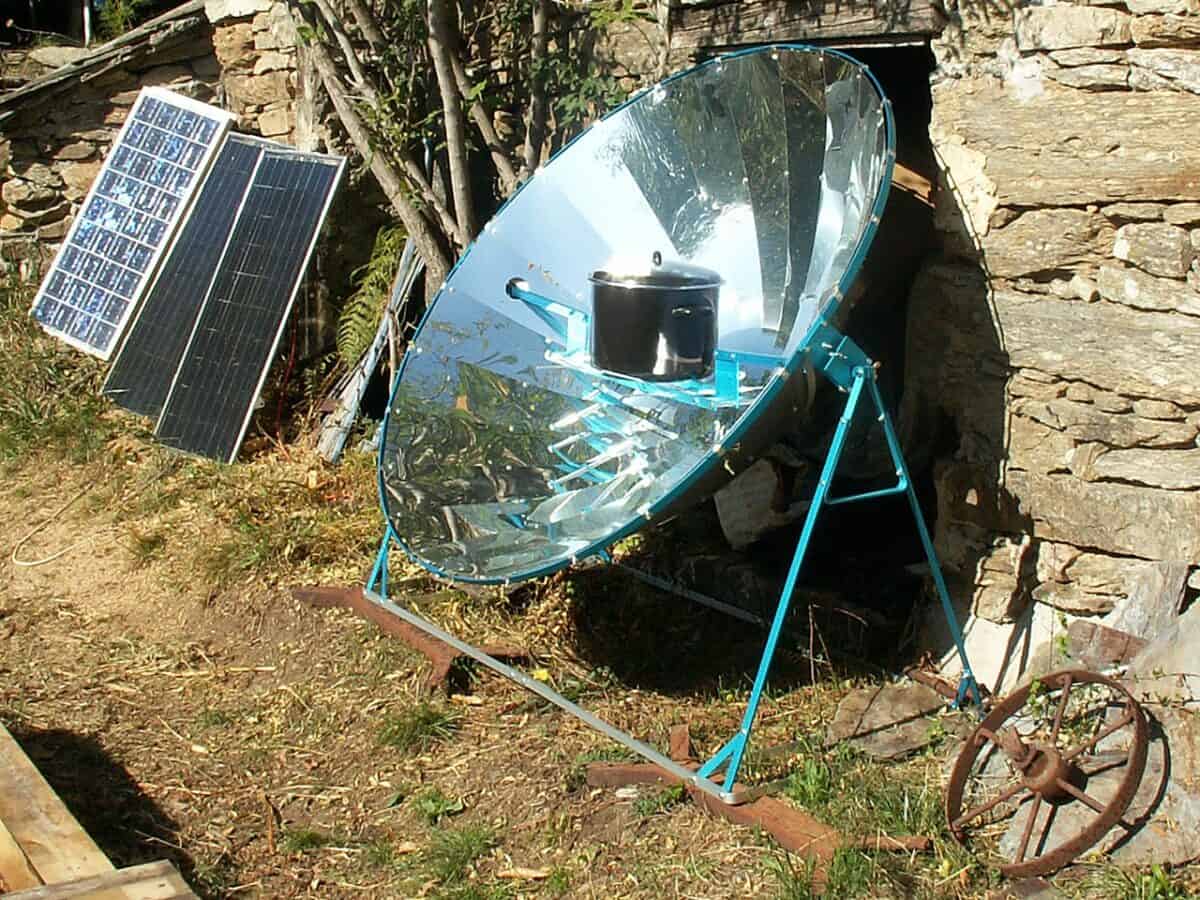
A team of scientists in Ghana has unveiled a new approach to solar-powered cooking, advancing the emerging field of e-cooking with solar photovoltaics (PV). Their innovation—an Institutional Solar Electric Steam Cooker (ISESC)—relies on steam generation powered by PV electricity and stored in a sand-based thermal energy system, offering a promising alternative to biomass and traditional solar cookers.
A New Direction for Solar Cooking
While solar cooking research has often focused on concentrator dishes, induction cookers, or resistive heating units, the Ghanaian group highlights a major gap: the untapped potential of sand as a durable, low-cost thermal medium. Sand’s high thermal stability makes it ideal for heat storage, yet its use for direct steam production in PV-based cooking setups has rarely been explored.
“The integration of sand-based thermal energy storage with solar PV-driven steam cooking remains largely uncharted territory,” the researchers noted, emphasizing that performance data for such systems is still limited.
How the Solar PV Steam Cooker Works
The prototype system features:
- 20 solar PV panels, each rated at 580 W with 22.65% efficiency, arranged on a south-facing ground mount with a 10° tilt.
- Generated electricity is fed into a thermal energy storage (TES) unit, consisting of:
- A mild-steel container filled with quarry sand
- An embedded DC resistive heater for charging the thermal battery
- Positioned above the sand bed is a 10-kg water chamber, where stored heat converts water to steam.
- The steam flows into a cooking chamber measuring 143 × 150 × 57.5 cm, enabling large-scale institutional food preparation.
The thermal battery (sand container) measures 15 × 65.5 × 44 cm, built for extended heat retention.
Field Testing in Kumasi
Testing took place at Kumasi’s Kunst Senior High School.
- Boiling trials: October 21–24, 2024 (10:00–15:00 daily)
- Cooking performance tests: November 5–7, 2024
Researchers used solar irradiance sensors, infrared temperature guns, ammeters, voltmeters, and thermal cameras to evaluate the system.
Strong Cooking Performance and Higher Efficiency
The ISESC’s cooking chamber reached 105–110 °C, allowing it to prepare substantial quantities of food:
- 16 kg rice in 80 minutes
- 16 kg beans in 140 minutes
- 32 kg plantain in 85 minutes
Overall thermal efficiency reached 38.9%, outperforming conventional Scheffler dish solar steam systems (25–26.5%). This represents a 12–14% efficiency gain under comparable conditions.
The sand-based TES stored 13–15 MJ of thermal energy—enough for 4–6 hours of stable cooking, even when solar irradiance dropped between 400–900 W/m².
Cost Savings and Environmental Benefits
A lifecycle assessment revealed compelling economic and environmental impacts:
- Payback period: ~4.5 years
- 20-year cost reduction: ~47% compared to biomass stoves
- Annual emission reductions:
- 5,312.22 kg CO₂
- 11.10 kg NOx
- 7.05 kg PM2.5
These reductions support Ghana’s clean cooking goals, cut deforestation pressure, and significantly decrease indoor air pollution—an important public-health concern.
Academic and Institutional Backing
The study, titled “Experimental analysis of an institutional solar PV-powered steam cooker with sand-based thermal energy storage,” appears in Solar Energy Advances. Researchers from:
- Kwame Nkrumah University of Science and Technology (KNUST)
- Technology Consultancy Centre – International Centre for Innovation, Manufacturing, Technology Transfer, and Entrepreneurship (TCC-CIMET)
- Cape Coast Technical University
collaborated on this groundbreaking work.
A Major Step Forward for Renewable-Based E-Cooking
The ISESC demonstrates that solar PV combined with sand-based thermal storage can deliver reliable, large-scale cooking for schools, institutions, and communities—without biomass, smoke, or fuel costs. As nations push toward cleaner cooking transitions and scalable renewable solutions, innovations like this could play a pivotal role in Africa’s energy future and global clean energy adoption.